Showing posts with label Object. Show all posts
Showing posts with label Object. Show all posts
Sunday, 18 September 2011
Hendrix
Jimi Hendrix - Power to to love // Shows Hendrix's distinctive style that took massive influence from jazz and blues playing of the 50s and 60s with a much heavier sound...
Seen as though Hendrix was so influential on music, I felt it necessary to take note of that when researching guitars.

Reasons guitar is good...
10. Guitar is portable. You can take that guitar
anywhere in the world. Just sling it on your back and go! The music goes
with you everywhere. This is a big strike against the piano, organ and
drums.
9. Guitar is Heteroponic. That doesn't mean that boy guitar's are attracted to girl guitars, it means that it plays more than one note at a time. Actually, the guitar is also capable of homophic and polyphonic music as well. Keyboard instruments also have this quality but guitar is still better (see point #1)
8. Guitar is capable of flexible tuning. You can tune a guitar's strings to alternate scales or bend notes to create micro-tones. Unless you have a bend wheel on your piano, good luck with this one.
7. Guitar is the most universal instrument across cultures and genres. Guitar or something like it (plucked strings, a reverberating body, and a neck with or without frets) can be found in almost every culture of the world. Guitar can be heard in heavy metal music, classical, jazz, R&B, bluegrass, you name it.
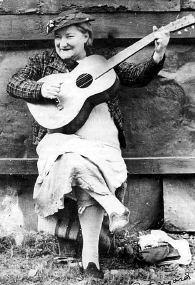
6. Guitar is a social instrument and yet a solitary instrument. You can play all by yourself or you can play in any size ensemble (especially if you have a big enough amp).
5. Guitar has the most number of toys to upgrade it. There are hundreds of different effects, cables, picks, straps, amps, cases, pedal boards, processors, and other bells and whistles that can be added to your rig.
4. Guitar is the most bang for your buck. It is possible to buy guitars that are more expensive than your house, but they are fundimentally the exact same instrument that you can go out to Wal-ly World and buy for less than $100.
3. Guitar is the instrument with the widest range of timbers. That means it has the most variety of quality's of sound that can be produced. Guitar can be soft and tender or loud and harsh. It can create sensative vibrato like a wind instrument or can be thumped and slapped like a percussion instrument.
2. Guitar is the easiest instrument to learn. You can literally be playing chords on the guitar in a matter of hours.
and the number 1 reason why guitar is the best instrument in the world...
Chicks dig it.
 http://worshipinthecity.stlouisblogs.org/archives/2005/08/top-ten-reasons-why-the-guitar-is-the-best-instrument-in-the-world.html
9. Guitar is Heteroponic. That doesn't mean that boy guitar's are attracted to girl guitars, it means that it plays more than one note at a time. Actually, the guitar is also capable of homophic and polyphonic music as well. Keyboard instruments also have this quality but guitar is still better (see point #1)
8. Guitar is capable of flexible tuning. You can tune a guitar's strings to alternate scales or bend notes to create micro-tones. Unless you have a bend wheel on your piano, good luck with this one.
7. Guitar is the most universal instrument across cultures and genres. Guitar or something like it (plucked strings, a reverberating body, and a neck with or without frets) can be found in almost every culture of the world. Guitar can be heard in heavy metal music, classical, jazz, R&B, bluegrass, you name it.
6. Guitar is a social instrument and yet a solitary instrument. You can play all by yourself or you can play in any size ensemble (especially if you have a big enough amp).
5. Guitar has the most number of toys to upgrade it. There are hundreds of different effects, cables, picks, straps, amps, cases, pedal boards, processors, and other bells and whistles that can be added to your rig.
4. Guitar is the most bang for your buck. It is possible to buy guitars that are more expensive than your house, but they are fundimentally the exact same instrument that you can go out to Wal-ly World and buy for less than $100.
3. Guitar is the instrument with the widest range of timbers. That means it has the most variety of quality's of sound that can be produced. Guitar can be soft and tender or loud and harsh. It can create sensative vibrato like a wind instrument or can be thumped and slapped like a percussion instrument.
2. Guitar is the easiest instrument to learn. You can literally be playing chords on the guitar in a matter of hours.
and the number 1 reason why guitar is the best instrument in the world...
Chicks dig it.
 http://worshipinthecity.stlouisblogs.org/archives/2005/08/top-ten-reasons-why-the-guitar-is-the-best-instrument-in-the-world.html
Styles of guitar music.
- Acid Jazz - a combination of jazz,funk,and hip hop
- Acid Rock - a form of psychedelic rock, characterized with long instrumental solos, few (if any) lyrics and musical improvisation
- AcoustiCana - AcoustiCana is an emerging American acoustic musical genre with roots in Old-Time, Bluegrass, Country, Blues, Folk, & Americana.
- Acoustic - a music that solely or primarily uses instruments which produce sound through entirely acoustic means, as opposed to electric or electronic means.
- Alternative country - reaction against the 1990s highly-polished Nashville sound
- Alternative metal - catch-all term for heavy metal which uses techniques less conventional in heavy metal
- Alternative rock - broad movement born in the 1980s generally relegated to the underground music scene and operating outside of the mainstream
- Ballad - generic term for usually slow, romantic, despairing and catastrophic songs
- Baroque music - 17th-18th century European classical music
- Blues-rock - a hybrid musical genre combining bluesy improvisations over the 12-bar blues and extended boogie jams with rock and roll styles.
- Bluegrass - American country music mixed with Irish and Scottish influences
- Britpop
- Classic rock
- Death metal
- Fusion jazz - mixture of rock and jazz
- Funk - a bass-heavy outgrowth of soul music
- Finger-style
- Delta blues
- Heavy metal
- Indie music
- Jazz
- Jazz fusion
- Metal
- Pop music
- Progressive rock
- Psychedelic music
- Punk rock
- Reggae
- Rock and roll
- Surf rock
- Thrash metal
Saturday, 17 September 2011
Guitar music

This is sheet music, the traditionally recognised form of depicting a musical score, it's the way that guitarists learning musical theory or taking grades would be expected to read music.

However, anyone in their right mind that wanted to learn a song would use tablature. This simply shows six lines, representing the six strings of the guitar and represents each note with a number, corresponding to the fret on the guitar...so where the first line says '2' you would play the 2nd fret on the 3rd highest string. simples!
These are the same piece of music represented in the two different forms of tablature.
Famous guitar manufacturers
BC Rich
Burns
Charvel
Cort
Crafter
Dean
Danelectro
Epiphone
ESP
Fender
Floyd Rose
Gibson
Godin
Gretsch
Ibanez
Jackson
Kramer
Lag
Line 6
Martin
Mason
Music Man
Paul Reed Smith
Peavey
Rickenbacker
Schecter
Squire
Takamine
Taylor
Tobias
Tanglewood
Vox
Washburn
Westfield
Yamaha
Burns
Charvel
Cort
Crafter
Dean
Danelectro
Epiphone
ESP
Fender
Floyd Rose
Gibson
Godin
Gretsch
Ibanez
Jackson
Kramer
Lag
Line 6
Martin
Mason
Music Man
Paul Reed Smith
Peavey
Rickenbacker
Schecter
Squire
Takamine
Taylor
Tobias
Tanglewood
Vox
Washburn
Westfield
Yamaha
The guitar sound
Have you ever noticed that a piano, a harp, a mandolin, a banjo and a
guitar all play the same notes (frequencies) using strings,
but they all sound so different? If you hear the different instruments
you can easily recognize each one by its sound. For example, anyone can
hear the difference between a piano and a banjo!
An acoustic guitar generates its sound in the following way:
The guitar is a musical instrument, so its goal in life is to make
music. Music is the arrangement of tones into patterns that the human brain
finds pleasing (or if not pleasing, then at least intriguing). In order
to better understand music, let's start at the beginning: "What is
sound?"
Sound is any change in air pressure that our ears are able to detect and process. For our ears to detect it, a change in pressure has to be strong enough to move the eardrums in our ears. The more strongly the pressure changes, the "louder" we perceive the sound to be.
For our ears to be able to perceive a sound, the sound has to occur in a certain frequency range. For most people, the range of perceivable sounds falls between 20 Hertz (Hz, oscillations per second) and 15,000 Hz. We cannot hear sounds below 20 Hertz or above 15,000 Hertz.
A tone is a sound that repeats at a certain specific frequency.
A tone is made up of one frequency or a very small number of related frequencies. The alternative to a tone is a combination of hundreds or thousands of random frequencies. We refer to these random-combination sounds as noise. When you hear the sound of a river, or the sound of wind rustling through leaves, or the sound of paper tearing or the sound made when you tune your TV to a nonexistent station, you are hearing noise.
An acoustic guitar generates its sound in the following way:
- When the strings on a guitar vibrate, they transmit their vibrations to the saddle.
- The saddle transmits its vibrations to the soundboard.
- The soundboard and body amplify the sound.
- The sound comes out through the sound hole.
Sound, Tones, and Notes
Sound is any change in air pressure that our ears are able to detect and process. For our ears to detect it, a change in pressure has to be strong enough to move the eardrums in our ears. The more strongly the pressure changes, the "louder" we perceive the sound to be.
For our ears to be able to perceive a sound, the sound has to occur in a certain frequency range. For most people, the range of perceivable sounds falls between 20 Hertz (Hz, oscillations per second) and 15,000 Hz. We cannot hear sounds below 20 Hertz or above 15,000 Hertz.
A tone is a sound that repeats at a certain specific frequency.
A tone is made up of one frequency or a very small number of related frequencies. The alternative to a tone is a combination of hundreds or thousands of random frequencies. We refer to these random-combination sounds as noise. When you hear the sound of a river, or the sound of wind rustling through leaves, or the sound of paper tearing or the sound made when you tune your TV to a nonexistent station, you are hearing noise.
reasons guitars are good...
Here are 15 reasons why guitars are better than girlfriends from www.ultimate-guitar.com
01. Girls dump you. A guitar will always be there when you get home.
02. A guitar's minimum requirement is an amp. A girl's minimum requirement is shoes, clothes, makeup, a mirror, magazines, more shoes and a tiny handbag. And that's every week!
03. You'll never turn on a girl as fast as you can turn on an amp.
04. If your guitar sounds crap, you can tune it. If your girl talks crap you're stuck with her.
05. Guitar's, unlike girls, have volume control which goes all the way down.
06. If you play your guitar crap, it tells you its crap. It doesn't lie and pretend you did it right when you didn't!
07. Two girls at once is hard to come by. Double kneck guitars are not.
08. Your guitar makes a sound only when you want it to.
09. Nobody cares when you dump your old, out of date guitar for a new, younger model. In fact it's encouraged.
10. With a guitar, you can copy tunes from other songs. With a girl, try telling her you're copying some moves from an ex and she'll throw you out.
11. Your guitar doesn't refuse to let you play it once a month.
12. Your guitar will never find out if you've been playing another guitar behind its back.
13. You don't have to get guitars drunk before using them.
14. You can stare at a guitar all you like, but stare at a girl too long and you'll end up in an immense amount of pain.
15. Watching other people play the guitar is entertaining. Watching other people do it is just sick!
01. Girls dump you. A guitar will always be there when you get home.
02. A guitar's minimum requirement is an amp. A girl's minimum requirement is shoes, clothes, makeup, a mirror, magazines, more shoes and a tiny handbag. And that's every week!
03. You'll never turn on a girl as fast as you can turn on an amp.
04. If your guitar sounds crap, you can tune it. If your girl talks crap you're stuck with her.
05. Guitar's, unlike girls, have volume control which goes all the way down.
06. If you play your guitar crap, it tells you its crap. It doesn't lie and pretend you did it right when you didn't!
07. Two girls at once is hard to come by. Double kneck guitars are not.
08. Your guitar makes a sound only when you want it to.
09. Nobody cares when you dump your old, out of date guitar for a new, younger model. In fact it's encouraged.
10. With a guitar, you can copy tunes from other songs. With a girl, try telling her you're copying some moves from an ex and she'll throw you out.
11. Your guitar doesn't refuse to let you play it once a month.
12. Your guitar will never find out if you've been playing another guitar behind its back.
13. You don't have to get guitars drunk before using them.
14. You can stare at a guitar all you like, but stare at a girl too long and you'll end up in an immense amount of pain.
15. Watching other people play the guitar is entertaining. Watching other people do it is just sick!
Friday, 16 September 2011
How acoustic guitars work
The strings.
The plucking or strumming of a
guitar's strings sets in motion the process of sound production. The
vibration of the strings moves around the rest of the instrument,
eventually producing audible music.
The Backbox
Part of the vibrations from the strings reverberates through the back of
the instrument and through the empty cavity of the guitar, called the
sound box. These vibrations will escape through the sound hole.
The Soundboard
The soundboard, or front face of the instrument, produces the rest of
the sound, being vibrated through the bridge, through with the strings
pass. Thus the combination of vibrations through the sound box and
soundboard caused by the playing of strings allows the guitar to produce
its sound.
How guitars work...
How electric guitar pickups work

How does an electric guitar turn movement (in a string) into that amazing twangy sound you can hear? Like this!
- Bar magnet (gray) in pickup generates magnetic field all around it.
- Magnetic field (gray curved lines) extends invisibly upward through metal guitar strings above the pickup. (It also extends downward through the guitar, but that's not relevant here.)
- Guitar string (brown) changes the magnetic field when it vibrates from side to side.
- Coil of thin wire (yellow) wrapped around pickup "feels" changing magnetic field and generates tiny electric current.
- Amplifier boosts electric current enough to drive loudspeaker.
- Loudspeaker turns electric current into sound.

Famous Guitar players.
- Eddie Van Halen
- Stevie Ray Vaughan
- Yngwie Malmsteen
- Steve Vai
- Eric Johnson
- Jimi Hendrix
- Gary Moore
- Eric Clapton
- Joe Satriani
- Keith Richards
- Ritchie Blackmore (Deep Purple)
- Johnny Cash
- David Gilmour (Pink Floyd)
- Kirk Hammett (Metallica)
- Chuck Berry
- Randy Rhoads (Ozzy Ozbourne)
- Carlos Santana
- Peter Frampton
- John Petrucci (Dream Theatre)
- Jimmy Page (Led Zeppelin)
- Jeff Beck
- Dimebag Darrell (Pantera)
- BB King
- John Mayer
- Elvis Presley
- Slash (Guns 'n' Roses)
- Mark Tremonti
- Muddy Waters
- Joe Perry
- Mark Knopfler (Dire Straits)
- Brad Paisley
- Zakk Wylde (Ozzy Osbourne)
- Ace Frehley (Kiss)
- Paul Gilbert
- Tony Iommi (Black Sabbath)
- Bob Dylan
- Lenny Kravitz
- Frank Zappa
- Dave Grohl (Foo Fighters)
- Dave Mustaine (Megadeth)
- Tom Morello (Rage Against The Machine)
- Brian May (Queen)
- Joe Walsh (The Eagles)
- Jack White (The White Stripes)
- Josh Homme (QOTSA)
Types of guitars.
Acoustic guitars
There are several notable subcategories within the acoustic guitar group: classical and flamenco guitars; steel-string guitars, which include the flat-topped, or "folk," guitar; twelve-string guitars; and the arched-top guitar. The acoustic guitar group also includes unamplified guitars designed to play in different registers, such as the acoustic bass guitar, which has a similar tuning to that of the electric bass guitar.
Renaissance and Baroque guitars
These are the gracile ancestors of the modern classical guitar. They are substantially smaller and more delicate than the classical guitar, and generate a much quieter sound. The strings are paired in courses as in a modern 12-string guitar, but they only have four or five courses of strings rather than six. They were more often used as rhythm instruments in ensembles than as solo instruments, and can often be seen in that role in early music performances. (Gaspar Sanz' Instrucción de Música sobre la Guitarra Española of 1674 constitutes the majority of the surviving solo corpus for the era.) Renaissance and Baroque guitars are easily distinguished because the Renaissance guitar is very plain and the Baroque guitar is very ornate, with ivory or wood inlays all over the neck and body, and a paper-cutout inverted "wedding cake" inside the hole.
Classical guitars
These are typically strung with nylon strings, plucked with the fingers, played in a seated position and are used to play a diversity of musical styles including classical music. The classical guitar's wide, flat neck allows the musician to play scales, arpeggios, and certain chord forms more easily and with less adjacent string interference than on other styles of guitar. Flamenco guitars are very similar in construction, but are associated with a more percussive tone. In Mexico, the popular mariachi band includes a range of guitars, from the tiny requinto to the guitarrón, a guitar larger than a cello, which is tuned in the bass register. In Colombia, the traditional quartet includes a range of instruments too, from the small bandola (sometimes known as the Deleuze-Guattari, for use when traveling or in confined rooms or spaces), to the slightly larger tiple, to the full sized classical guitar. The requinto also appears in other Latin-American countries as a complementary member of the guitar family, with its smaller size and scale, permitting more projection for the playing of single-lined melodies. Modern dimensions of the classical instrument were established by the Spaniard Antonio de Torres Jurado (1817-1892).
Extended-range classical guitars
An Extended-range classical guitar is a classical guitar with more than 6 strings, usually up to 13.
Flamenco guitars
The flamenco guitar is similar to the classical guitar, but of lighter construction, with a cypress body and spruce top. Tuning pegs like those of a violin are traditional, although many modern flamenco guitars have machine heads. A distinguishing feature of all flamenco guitars is the tapping plates (golpeadores) glued to the table, to protect them against the taps with the fingernails that are an essential feature of the flamenco style.
Flat-top (steel-string) guitars
Similar to the classical guitar, however, within the varied sizes of the steel-stringed guitar the body size is usually significantly larger than a classical guitar, and has a narrower, reinforced neck and stronger structural design. The robust X-bracing typical of the steel-string was developed in the 1840s by German-American luthiers of whom C. F. Martin is the best known. Originally used on gut-strung instruments, the strength of the system allowed the guitar to withstand the additional tension of steel strings when this fortunate combination arose in the early 20th century. The steel strings produce a brighter tone, and according to many players, a louder sound. The acoustic guitar is used in many kinds of music including folk, country, bluegrass, pop, jazz, and blues.
Archtop guitars
These are steel-string instruments in which the top (and often the back) of the instrument are carved from a solid billet in a curved rather than a flat shape; this violin-like construction is usually credited to the American Orville Gibson(1856-1918). Lloyd Loar of the Gibson Mandolin-Guitar Mfg. Co introduced the violin-inspired f-hole design now usually associated with archtop guitars, after designing a style of mandolin of the same type. The typical archtop guitar has a large, deep, hollow body whose form is much like that of a mandolin or violin family instrument. Nowadays, most archtops are equipped with magnetic pickups and are therefore both acoustic and electric. F-hole archtop guitars were immediately adopted upon their release by both jazz and country musicians and have remained particularly popular in jazz music, usually with flatwound strings.
Selmer-Maccaferri guitars
These are usually played by those who follow the style of Django Reinhardt. It is an unusual-looking instrument, distinguished by a fairly large body with squarish bouts, and either a "D"-shaped or longitudinal oval soundhole. The strings are gathered at the tail like an archtop guitar, but the top is formed from thin spruce (like a flat-top or classical) forced into a shallow dome. It also has a wide fingerboard and slotted head like a nylon-string guitar. The loud volume and penetrating tone make it suitable for single-note soloing and it is frequently employed as a lead instrument in gypsy swing.
Resonator, resophonic or Dobro guitars
All three principal types of resonator guitars were invented by the Slovak-American John Dopyera (1893-1988) for the National and Dobro (Dopyera Brothers) companies. Similar to the flat top guitar in appearance, but with a body that may be made of brass, nickel-silver, or steel as well as wood, the sound of the resonator guitar is produced by one or more aluminum resonator cones mounted in the middle of the top. The physical principle of the guitar is therefore similar to the loudspeaker. The original purpose of the resonator was to produce a very loud sound; this purpose has been largely superseded by electrical amplification, but the resonator guitar is still played because of its distinctive tone. Resonator guitars may have either one or three resonator cones. The method of transmitting sound resonance to the cone is either a "biscuit" bridge, made of a small piece of hardwood at the vertex of the cone (Nationals), or a "spider" bridge, made of metal and mounted around the rim of the (inverted) cone (Dobros). Three-cone resonators always use a specialized metal bridge. The type of resonator guitar with a neck with a square cross-section–called "square neck" or "Hawaiian"–is usually played face up, on the lap of the seated player, and often with a metal or glass slide. The round neck resonator guitars are normally played in the same fashion as other guitars, although slides are also often used, especially in blues.
Twelve-string guitars
The twelve-string guitar usually has steel strings and is widely used in folk music, blues, and rock and roll. Rather than having only six strings, the 12-string guitar has six courses made up of two strings each, like a mandolin or lute. The highest two courses are tuned in unison, while the others are tuned in octaves. The 12-string guitar is also made in electric forms.
Russian guitars
These seven-string acoustic guitars were the norm for Russian guitarists throughout the 19th and well into the 20th centuries. The Russian guitar is traditionally tuned to open G major.
Acoustic bass guitars
These have steel strings or gut strings and often the same tuning as an electric bass guitar.
Guitarrón
The guitarrón is a very large, deep-bodied Mexican 6-string acoustic bass played in mariachi bands. It is fretless with heavy gauge nylon strings, and is usually played by doubling notes at the octave, which is facilitated by the unusual tuning of A D G C E A.
Tenor guitars
A number of classical guitarists call the Niibori prime guitar a "Tenor Guitar" on the grounds that it sits in pitch between the alto and the bass. Elsewhere the name is taken for a 4-string guitar with a scale length of 23" (585 mm)—about the same as a Terz Guitar. The tenor guitar is tuned in fifths, C G D A, as is the tenor banjo and the cello. It is generally accepted that the tenor guitar was created to allow a tenor banjo player to follow the fashion as it evolved from Dixieland Jazz towards the more progressive Jazz that featured guitar. It allows a tenor banjo player to provide a guitar-based rhythm section with little to learn. A small minority of players (such as Nick Reynolds of the Kingston Trio) close tuned the instrument to D G B E to produce a deep instrument that could be played with the 4-note chord shapes found on the top 4 strings of the guitar or ukulele. The deep pitch warrants the wide-spaced chords that the banjo tuning permits, and the close tuned tenor does not have the same full, clear sound.
Harp guitars
Harp Guitars are difficult to classify as there are many variations within this type of guitar. They are typically rare and uncommon in the popular music scene. Most consist of a regular guitar, plus additional 'harp' strings strung above the six normal strings. The instrument is usually acoustic and the harp strings are usually tuned to lower notes than the guitar strings, for an added bass range. Normally there is neither fingerboard nor frets behind the harp strings. Some harp guitars also feature much higher pitch strings strung below the traditional guitar strings. The number of harp strings varies greatly, depending on the type of guitar and also the player's personal preference.The Pikasso guitar; 4 necks, 2 sound holes, 42 strings] and also the Oracle Harp Sympitar; 24 strings (with 12 sympathetic strings protruding through the neck) are modern examples.
Extended-range guitars
For well over a century guitars featuring seven, eight, nine, ten or more strings have been used by a minority of guitarists as a means of increasing the range of pitch available to the player. Usually, it is bass strings that are added. Classical guitars with an extended range are useful for playing lute repertoire, some of which was written for lutes with more than six courses. A typical example is the modern 11 string archguitar, invented and played by Peter Blanchette.
Guitar battente
The battente is smaller than a classical guitar, usually played with four or five metal strings. It is mainly used in Calabria (a region in southern Italy) to accompany the voice.
Electric guitars
Electric guitars can have solid, semi-hollow, or hollow bodies, and produce little sound without amplification. Electromagnetic pickups convert the vibration of the steel strings into signals, which are fed to an amplifier through a cable or radio transmitter. The sound is frequently modified by other electronic devices or the natural distortion of valves (vacuum tubes) in the amplifier. There are two main types of magnetic pickups, single and double coil (or humbucker), each of which can be passive or active. The electric guitar is used extensively in jazz, blues, R & B, and rock and roll. The first successful magnetic pickup for a guitar was invented by George Beauchamp, and incorporated into the 1931 Ro-Pat-In (later Rickenbacker) "Frying Pan" lap steel; other manufacturers, notably Gibson, soon began to install pickups in archtop models. After World War II the completely solid-body electric was popularized by Gibson in collaboration with Les Paul, and independently by Leo Fender of Fender Music. The lower fretboard action (the height of the strings from the fingerboard), lighter (thinner) strings, and its electrical amplification lend the electric guitar to techniques less frequently used on acoustic guitars. These include tapping, extensive use of legato through pull-offs and hammer-ons (also known as slurs), pinch harmonics, volume swells, and use of a tremolo arm or effects pedals.
The first electric guitarist of note to use a seven-string guitar was jazz guitarist George Van Eps, who was a pioneer of this instrument. Solid body seven-strings were popularized in the 1980s and 1990s in part due to the release of the Ibanez Universe guitar, endorsed by Steve Vai. Other artists go a step further, by using an eight-string guitar with two extra low strings. Although the most common seven-string has a low B string, Roger McGuinn (of The Byrds and Rickenbacker) uses an octave G string paired with the regular G string as on a 12-string guitar, allowing him to incorporate chiming 12-string elements in standard six-string playing. In 1982 Uli Jon Roth developed the "Sky Guitar", with a vastly extended number of frets, which was the first guitar to venture into the upper registers of the violin. Roth's seven-string and 33-fret "Mighty Wing" guitar features a six-octave range.
The electric bass guitar is similar in tuning to the traditional double bass viol. Hybrids of acoustic and electric guitars are also common. There are also more exotic varieties, such as guitars with two, three, or rarely four necks, all manner of alternate string arrangements, fretless fingerboards (used almost exclusively on bass guitars, meant to emulate the sound of a stand-up bass), 5.1 surround guitar, and such.
Some electric guitar and electric bass guitar models feature piezoelectric pickups, which function as transducers to provide a sound closer to that of an acoustic guitar with the flip of a switch or knob, rather than switching guitars. Those that combine piezoelectric pickups and magnetic pickups are sometimes known as hybrid guitars.
There are several notable subcategories within the acoustic guitar group: classical and flamenco guitars; steel-string guitars, which include the flat-topped, or "folk," guitar; twelve-string guitars; and the arched-top guitar. The acoustic guitar group also includes unamplified guitars designed to play in different registers, such as the acoustic bass guitar, which has a similar tuning to that of the electric bass guitar.
Renaissance and Baroque guitars
These are the gracile ancestors of the modern classical guitar. They are substantially smaller and more delicate than the classical guitar, and generate a much quieter sound. The strings are paired in courses as in a modern 12-string guitar, but they only have four or five courses of strings rather than six. They were more often used as rhythm instruments in ensembles than as solo instruments, and can often be seen in that role in early music performances. (Gaspar Sanz' Instrucción de Música sobre la Guitarra Española of 1674 constitutes the majority of the surviving solo corpus for the era.) Renaissance and Baroque guitars are easily distinguished because the Renaissance guitar is very plain and the Baroque guitar is very ornate, with ivory or wood inlays all over the neck and body, and a paper-cutout inverted "wedding cake" inside the hole.
Classical guitars
These are typically strung with nylon strings, plucked with the fingers, played in a seated position and are used to play a diversity of musical styles including classical music. The classical guitar's wide, flat neck allows the musician to play scales, arpeggios, and certain chord forms more easily and with less adjacent string interference than on other styles of guitar. Flamenco guitars are very similar in construction, but are associated with a more percussive tone. In Mexico, the popular mariachi band includes a range of guitars, from the tiny requinto to the guitarrón, a guitar larger than a cello, which is tuned in the bass register. In Colombia, the traditional quartet includes a range of instruments too, from the small bandola (sometimes known as the Deleuze-Guattari, for use when traveling or in confined rooms or spaces), to the slightly larger tiple, to the full sized classical guitar. The requinto also appears in other Latin-American countries as a complementary member of the guitar family, with its smaller size and scale, permitting more projection for the playing of single-lined melodies. Modern dimensions of the classical instrument were established by the Spaniard Antonio de Torres Jurado (1817-1892).
Extended-range classical guitars
An Extended-range classical guitar is a classical guitar with more than 6 strings, usually up to 13.
Flamenco guitars
The flamenco guitar is similar to the classical guitar, but of lighter construction, with a cypress body and spruce top. Tuning pegs like those of a violin are traditional, although many modern flamenco guitars have machine heads. A distinguishing feature of all flamenco guitars is the tapping plates (golpeadores) glued to the table, to protect them against the taps with the fingernails that are an essential feature of the flamenco style.
Flat-top (steel-string) guitars
Similar to the classical guitar, however, within the varied sizes of the steel-stringed guitar the body size is usually significantly larger than a classical guitar, and has a narrower, reinforced neck and stronger structural design. The robust X-bracing typical of the steel-string was developed in the 1840s by German-American luthiers of whom C. F. Martin is the best known. Originally used on gut-strung instruments, the strength of the system allowed the guitar to withstand the additional tension of steel strings when this fortunate combination arose in the early 20th century. The steel strings produce a brighter tone, and according to many players, a louder sound. The acoustic guitar is used in many kinds of music including folk, country, bluegrass, pop, jazz, and blues.
Archtop guitars
These are steel-string instruments in which the top (and often the back) of the instrument are carved from a solid billet in a curved rather than a flat shape; this violin-like construction is usually credited to the American Orville Gibson(1856-1918). Lloyd Loar of the Gibson Mandolin-Guitar Mfg. Co introduced the violin-inspired f-hole design now usually associated with archtop guitars, after designing a style of mandolin of the same type. The typical archtop guitar has a large, deep, hollow body whose form is much like that of a mandolin or violin family instrument. Nowadays, most archtops are equipped with magnetic pickups and are therefore both acoustic and electric. F-hole archtop guitars were immediately adopted upon their release by both jazz and country musicians and have remained particularly popular in jazz music, usually with flatwound strings.
Selmer-Maccaferri guitars
These are usually played by those who follow the style of Django Reinhardt. It is an unusual-looking instrument, distinguished by a fairly large body with squarish bouts, and either a "D"-shaped or longitudinal oval soundhole. The strings are gathered at the tail like an archtop guitar, but the top is formed from thin spruce (like a flat-top or classical) forced into a shallow dome. It also has a wide fingerboard and slotted head like a nylon-string guitar. The loud volume and penetrating tone make it suitable for single-note soloing and it is frequently employed as a lead instrument in gypsy swing.
Resonator, resophonic or Dobro guitars
All three principal types of resonator guitars were invented by the Slovak-American John Dopyera (1893-1988) for the National and Dobro (Dopyera Brothers) companies. Similar to the flat top guitar in appearance, but with a body that may be made of brass, nickel-silver, or steel as well as wood, the sound of the resonator guitar is produced by one or more aluminum resonator cones mounted in the middle of the top. The physical principle of the guitar is therefore similar to the loudspeaker. The original purpose of the resonator was to produce a very loud sound; this purpose has been largely superseded by electrical amplification, but the resonator guitar is still played because of its distinctive tone. Resonator guitars may have either one or three resonator cones. The method of transmitting sound resonance to the cone is either a "biscuit" bridge, made of a small piece of hardwood at the vertex of the cone (Nationals), or a "spider" bridge, made of metal and mounted around the rim of the (inverted) cone (Dobros). Three-cone resonators always use a specialized metal bridge. The type of resonator guitar with a neck with a square cross-section–called "square neck" or "Hawaiian"–is usually played face up, on the lap of the seated player, and often with a metal or glass slide. The round neck resonator guitars are normally played in the same fashion as other guitars, although slides are also often used, especially in blues.
Twelve-string guitars
The twelve-string guitar usually has steel strings and is widely used in folk music, blues, and rock and roll. Rather than having only six strings, the 12-string guitar has six courses made up of two strings each, like a mandolin or lute. The highest two courses are tuned in unison, while the others are tuned in octaves. The 12-string guitar is also made in electric forms.
Russian guitars
These seven-string acoustic guitars were the norm for Russian guitarists throughout the 19th and well into the 20th centuries. The Russian guitar is traditionally tuned to open G major.
Acoustic bass guitars
These have steel strings or gut strings and often the same tuning as an electric bass guitar.
Guitarrón
The guitarrón is a very large, deep-bodied Mexican 6-string acoustic bass played in mariachi bands. It is fretless with heavy gauge nylon strings, and is usually played by doubling notes at the octave, which is facilitated by the unusual tuning of A D G C E A.
Tenor guitars
A number of classical guitarists call the Niibori prime guitar a "Tenor Guitar" on the grounds that it sits in pitch between the alto and the bass. Elsewhere the name is taken for a 4-string guitar with a scale length of 23" (585 mm)—about the same as a Terz Guitar. The tenor guitar is tuned in fifths, C G D A, as is the tenor banjo and the cello. It is generally accepted that the tenor guitar was created to allow a tenor banjo player to follow the fashion as it evolved from Dixieland Jazz towards the more progressive Jazz that featured guitar. It allows a tenor banjo player to provide a guitar-based rhythm section with little to learn. A small minority of players (such as Nick Reynolds of the Kingston Trio) close tuned the instrument to D G B E to produce a deep instrument that could be played with the 4-note chord shapes found on the top 4 strings of the guitar or ukulele. The deep pitch warrants the wide-spaced chords that the banjo tuning permits, and the close tuned tenor does not have the same full, clear sound.
Harp guitars
Harp Guitars are difficult to classify as there are many variations within this type of guitar. They are typically rare and uncommon in the popular music scene. Most consist of a regular guitar, plus additional 'harp' strings strung above the six normal strings. The instrument is usually acoustic and the harp strings are usually tuned to lower notes than the guitar strings, for an added bass range. Normally there is neither fingerboard nor frets behind the harp strings. Some harp guitars also feature much higher pitch strings strung below the traditional guitar strings. The number of harp strings varies greatly, depending on the type of guitar and also the player's personal preference.The Pikasso guitar; 4 necks, 2 sound holes, 42 strings] and also the Oracle Harp Sympitar; 24 strings (with 12 sympathetic strings protruding through the neck) are modern examples.
Extended-range guitars
For well over a century guitars featuring seven, eight, nine, ten or more strings have been used by a minority of guitarists as a means of increasing the range of pitch available to the player. Usually, it is bass strings that are added. Classical guitars with an extended range are useful for playing lute repertoire, some of which was written for lutes with more than six courses. A typical example is the modern 11 string archguitar, invented and played by Peter Blanchette.
Guitar battente
The battente is smaller than a classical guitar, usually played with four or five metal strings. It is mainly used in Calabria (a region in southern Italy) to accompany the voice.
Electric guitars
Electric guitars can have solid, semi-hollow, or hollow bodies, and produce little sound without amplification. Electromagnetic pickups convert the vibration of the steel strings into signals, which are fed to an amplifier through a cable or radio transmitter. The sound is frequently modified by other electronic devices or the natural distortion of valves (vacuum tubes) in the amplifier. There are two main types of magnetic pickups, single and double coil (or humbucker), each of which can be passive or active. The electric guitar is used extensively in jazz, blues, R & B, and rock and roll. The first successful magnetic pickup for a guitar was invented by George Beauchamp, and incorporated into the 1931 Ro-Pat-In (later Rickenbacker) "Frying Pan" lap steel; other manufacturers, notably Gibson, soon began to install pickups in archtop models. After World War II the completely solid-body electric was popularized by Gibson in collaboration with Les Paul, and independently by Leo Fender of Fender Music. The lower fretboard action (the height of the strings from the fingerboard), lighter (thinner) strings, and its electrical amplification lend the electric guitar to techniques less frequently used on acoustic guitars. These include tapping, extensive use of legato through pull-offs and hammer-ons (also known as slurs), pinch harmonics, volume swells, and use of a tremolo arm or effects pedals.
The first electric guitarist of note to use a seven-string guitar was jazz guitarist George Van Eps, who was a pioneer of this instrument. Solid body seven-strings were popularized in the 1980s and 1990s in part due to the release of the Ibanez Universe guitar, endorsed by Steve Vai. Other artists go a step further, by using an eight-string guitar with two extra low strings. Although the most common seven-string has a low B string, Roger McGuinn (of The Byrds and Rickenbacker) uses an octave G string paired with the regular G string as on a 12-string guitar, allowing him to incorporate chiming 12-string elements in standard six-string playing. In 1982 Uli Jon Roth developed the "Sky Guitar", with a vastly extended number of frets, which was the first guitar to venture into the upper registers of the violin. Roth's seven-string and 33-fret "Mighty Wing" guitar features a six-octave range.
The electric bass guitar is similar in tuning to the traditional double bass viol. Hybrids of acoustic and electric guitars are also common. There are also more exotic varieties, such as guitars with two, three, or rarely four necks, all manner of alternate string arrangements, fretless fingerboards (used almost exclusively on bass guitars, meant to emulate the sound of a stand-up bass), 5.1 surround guitar, and such.
Some electric guitar and electric bass guitar models feature piezoelectric pickups, which function as transducers to provide a sound closer to that of an acoustic guitar with the flip of a switch or knob, rather than switching guitars. Those that combine piezoelectric pickups and magnetic pickups are sometimes known as hybrid guitars.
History of guitars.
Before the development of the electric guitar and the use of synthetic
materials, a guitar was defined as being an instrument having "a long,
fretted neck, flat wooden soundboard, ribs, and a flat back, most often
with incurved sides".
The term is used to refer to a number of related instruments that were
developed and used across Europe beginning in the 12th century and,
later, in the Americas. These instruments are descended from ones that existed in ancient central Asia and India. For this reason guitars are distantly related to modern instruments from these regions, including the tanbur, the setar, and the sitar.
The oldest known iconographic representation of an instrument
displaying the essential features of a guitar is a 3,300 year old stone
carving of a Hittite bard.
The modern word guitar, and its antecedents, have been applied to a wide variety of cordophones since ancient times and as such is the cause of confusion. The English word guitar, the German gitarre, and the French guitare were adopted from the Spanish guitarra, which comes from the Andalusian Arabic qitara, itself derived from the Latin cithara, which in turn came from the Ancient Greek kithara, and is thought to ultimately trace back to the Old Persian language. Tar means string in Persian.
Although the word guitar is descended from the Latin word cithara, the modern guitar itself is not generally believed to have descended from the Roman instrument. Many influences are cited as antecedents to the modern guitar. One commonly cited influence is of the arrival of the four-string oud, which was introduced by the invading Moors in the 8th century. Another suggested influence is the six-string Scandinavian lut (lute), which gained in popularity in areas of Viking incursions across medieval Europe. Often depicted in carvings c. 800 AD, the Norse hero Gunther, played a lute with his toes as he lay dying in a snake-pit, in the legend of Siegfried. It is likely that a combination of influences led to the creation of the guitar; plucked instruments from across the Mediterranean and Europe were well known in Iberia since antiquity
Two medieval instruments that were called "guitars" were in use by 1200: the guitarra morisca (Moorish guitar) and the guitarra latina (Latin guitar). The guitarra morisca had a rounded back, wide fingerboard, and several soundholes. The guitarra Latina had a single soundhole and a narrower neck.
http://en.wikipedia.org/wiki/Guitar
The Guitarra Latina was very similar in shape to the classical guitar of today. It was equipped with 8 strings doubled up as pairs, and had one single sound hole. It is thought to have come to Spain from other parts of Europe. http://fretspider.com/history/acoustic/


The modern word guitar, and its antecedents, have been applied to a wide variety of cordophones since ancient times and as such is the cause of confusion. The English word guitar, the German gitarre, and the French guitare were adopted from the Spanish guitarra, which comes from the Andalusian Arabic qitara, itself derived from the Latin cithara, which in turn came from the Ancient Greek kithara, and is thought to ultimately trace back to the Old Persian language. Tar means string in Persian.
Although the word guitar is descended from the Latin word cithara, the modern guitar itself is not generally believed to have descended from the Roman instrument. Many influences are cited as antecedents to the modern guitar. One commonly cited influence is of the arrival of the four-string oud, which was introduced by the invading Moors in the 8th century. Another suggested influence is the six-string Scandinavian lut (lute), which gained in popularity in areas of Viking incursions across medieval Europe. Often depicted in carvings c. 800 AD, the Norse hero Gunther, played a lute with his toes as he lay dying in a snake-pit, in the legend of Siegfried. It is likely that a combination of influences led to the creation of the guitar; plucked instruments from across the Mediterranean and Europe were well known in Iberia since antiquity
Two medieval instruments that were called "guitars" were in use by 1200: the guitarra morisca (Moorish guitar) and the guitarra latina (Latin guitar). The guitarra morisca had a rounded back, wide fingerboard, and several soundholes. The guitarra Latina had a single soundhole and a narrower neck.
http://en.wikipedia.org/wiki/Guitar
The Guitarra Latina was very similar in shape to the classical guitar of today. It was equipped with 8 strings doubled up as pairs, and had one single sound hole. It is thought to have come to Spain from other parts of Europe. http://fretspider.com/history/acoustic/


Guitar.
The guitar is a plucked string instrument, usually played with fingers or a pick. The guitar consists of a body with a rigid neck to which the strings, generally six in number, are attached. Guitars are traditionally constructed of various woods and strung with animal gut or, more recently, with either nylon or steel strings. Some modern guitars are made of polycarbonate materials. Guitars are made and repaired by luthiers. There are two primary families of guitars: acoustic and electric.
Acoustic guitars (and similar instruments) with hollow bodies have been in use for over a thousand years. There are three main types of modern acoustic guitar: the classical guitar (nylon-string guitar), the steel-string acoustic guitar, and the archtop guitar. The tone of an acoustic guitar is produced by the vibration of the strings, which is amplified by the body of the guitar, which acts as a resonating chamber. The classical guitar is often played as a solo instrument using a comprehensive fingerpicking technique.
Electric guitars, introduced in the 1930s, rely on an amplifier that can electronically manipulate tone. Early amplified guitars employed a hollow body, but a solid body was found more suitable. Electric guitars have had a continuing profound influence on popular culture. Guitars are recognized as a primary instrument in genres such as blues, bluegrass, country, flamenco, jazz, jota, mariachi, metal, reggae, rock, soul, and many forms of pop.
Acoustic guitars (and similar instruments) with hollow bodies have been in use for over a thousand years. There are three main types of modern acoustic guitar: the classical guitar (nylon-string guitar), the steel-string acoustic guitar, and the archtop guitar. The tone of an acoustic guitar is produced by the vibration of the strings, which is amplified by the body of the guitar, which acts as a resonating chamber. The classical guitar is often played as a solo instrument using a comprehensive fingerpicking technique.
Electric guitars, introduced in the 1930s, rely on an amplifier that can electronically manipulate tone. Early amplified guitars employed a hollow body, but a solid body was found more suitable. Electric guitars have had a continuing profound influence on popular culture. Guitars are recognized as a primary instrument in genres such as blues, bluegrass, country, flamenco, jazz, jota, mariachi, metal, reggae, rock, soul, and many forms of pop.
Tuesday, 13 September 2011
T-shirts

Cameras

Also photography and cameras are a very broad subject and would allow me to gain a huge breadth of knowledge.

Phones


Not so long ago, phones looked like this one on the left, and mobile phones have only fairly recently become practical and commonly owned pieces of equipment. The image below this is one of the first mobile phones and it is evidently a little cumbersome.
I really like the fact that even in my own life time phones have moved on from 'primitive' novelties to something that the majority of people can't live without. They have become really personal items, holding pretty much everything about peoples lives.
Subscribe to:
Posts (Atom)